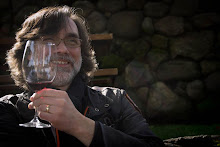
I remember Pastor Miller preaching at Barclay Heights Community Church. We met in the lodge of an old YMCA camp on Esopus Creek near Glenerie Falls. When the lodge became our permanent home, we changed the name of the church to Glenerie Chapel.
I remember Pastor Miller praying; his opening prayers were nearly the equal of his sermons. These were not pithy, punchy, sound-bited perfunctories; his prayers were ten minutes of engagement with God on matters of the day, from local to global.
I remember Pastor Miller’s velvet singing voice. It reminded me of a baritone Andy Williams with a bit of Mel Torme. From where I sat, singing seemed to be pure pleasure for him.
I remember Pastor Miller telling us about Christ’s Passion during a springtime Sunday night service thirty-some years ago. One of the other teens ran out of the lodge, weeping – overtaken by the description of what Jesus had endured for him. I ran after him and listened to his story.
I remember Pastor Miller’s Christianity including humanness. He didn’t try to portray himself as saintly; he wasn’t aloof from his congregation. He wasn’t afraid to laugh.
I don’t remember when Pastor Miller invited me to call him “Bob”. The truth is I never really got used to it. He was simply “Pastor” to me.
I remember Pastor Miller saying he thought I’d become a pastor someday. I didn’t like that, and I fought it for a long time. But over the years, his was among a small number of voices through which God conferred that calling to me. I don’t wear it as comfortably as he did but I try to be true to my legacy.
Today, I’m remembering to remember because it’s the day of Pastor’s memorial service. I wish I could be present. He and his family are very much on my mind. I’m praying they feel the support of their communities as they find their way forward. I’m praying they know they’re not carrying his memory alone. And I’m praying they find grace today to celebrate him with all their might.
Showing posts with label Jesus. Show all posts
Showing posts with label Jesus. Show all posts
3/28/2008
9/04/2007
Jesus at the Tension Point
Near the end of his book about Jesus, John the Apostle includes a story about transitions. It happened after Jesus had been raised again to life. John and a few of the other fishermen had been working the sea all night long.
The narrative is rich with symbolism though it doesn’t read as the fanciful sort; it reads as real-life that’s saturated with meaning.
Jesus is standing in the sand between sea and land. He is slowly becoming visible as night dissolves into dawn. He is shouting lightheartedness into frustration and fatigue. He is acknowledging futility and offering a surprise of fruitfulness.
This sort of disruptive goodness – this sense-making presence at the tension point of change and uncertainty – is what makes Jesus recognizable to his friends.
The narrative is rich with symbolism though it doesn’t read as the fanciful sort; it reads as real-life that’s saturated with meaning.
Jesus is standing in the sand between sea and land. He is slowly becoming visible as night dissolves into dawn. He is shouting lightheartedness into frustration and fatigue. He is acknowledging futility and offering a surprise of fruitfulness.
This sort of disruptive goodness – this sense-making presence at the tension point of change and uncertainty – is what makes Jesus recognizable to his friends.
5/06/2004
Dove
I’d been thinking about making a pilgrimage to my hometown. I hadn’t been back there for eleven years, and that had only been a brief visit. So, it had been a long time since I’d really spent any time there.
Conventional wisdom says you can never go home. I’d been warned that the area had changed considerably, and not for the better. But that didn’t really touch my reasons for wanting to go.
My memories of Ulster County had begun to fade. Their substance was wearing thin. It was more like remembering a book I’d read than a place I’d lived. I felt impelled to go back and hold a handful of dirt. As odd as it sounds, I needed to verify for myself that it was still real.
This growing eagerness to return home became more urgent when my Grandmother’s health took a bad turn. It was beginning to seem like she might be within view of the end of her journey.
She’d smoked for most of her life, and her struggles with emphysema during recent years hadn’t sufficiently motivated her to quit. Now she’d finally been forced to exchange her cigarettes for a portable oxygen tank.
Because she adamantly refused to fly, and because I couldn’t afford to, it’d been far too long since we’d visited face to face. It seemed imperative that I get there, but I couldn’t figure out how to pull it off.
The answer came in the form of an exceptional birthday gift. My wife spread the word that she would set out a “tip jar” at my party for contributions toward my airfare and hotel. Thanks to the generosity of friends and family, the trip became possible.
After settling into my hotel room, I drove to my Grandmother’s home on Old Sawkill Road. She met me in the doorway with her calm, wide smile. It was a good reunion.
We talked for a while, and then she asked me if I’d mind doing a few chores. She could still brew a fine pot of coffee, but there were other things she could no longer do. A neighbor helped her out from time to time, but as she put it, “He ain’t so young no more either.”
One of the chores was refilling her birdfeeder with seed. She stood beside the ladder, under the butternut tree and coached me through the task. The feeder was an antique, clear plastic contraption. A little door had to be worked open in order for a portion of birdseed to spill out onto the tray.
Grammy Burnett had a soft spot for birds. More than once she’d rescued a fallen robin or sparrow, and successfully nursed it back to health. I’ve heard stories about a blackbird she saved that became something like a pet. It staid nearby for a long time, and would even perch on her shoulder like a parrot.
She was still looking at the birdfeeder as I eased my way down the ladder. She said, “The dove will come around. She’s smart, she’ll open the latch. Then the other little birds will get some seeds too.”
She hadn’t intended to make a profound statement. She didn’t care much for fancy talk. But there it was, a perfect poetic image of kindness.
When I got back to my hotel room, I wrote her words in my journal so I wouldn’t forget them. They stirred up a holy gratefulness in my spirit for the doves in my life.
The Great Dove opens the latch, and courage, humility, integrity, balance, meaning, generosity, salvation… spill out into life. Then we learn to open latches for one another. We learn about kindness and grace.
That was, in fact, the way I’d gotten to be there that spring. Kind people created the means for me to spend a few days with the woman who had taught me how to handle a fishing pole. She died in December of that same year. She was one of the smartest doves I ever knew.
"I saw the Spirit come down from heaven as a dove and remain on him. I would not have known him, except that the one who sent me to baptize with water told me, 'The man on whom you see the Spirit come down and remain is he who will baptize with the Holy Spirit.' I have seen and I testify that this is the Son of God."
John the Baptist, describing Jesus.
Conventional wisdom says you can never go home. I’d been warned that the area had changed considerably, and not for the better. But that didn’t really touch my reasons for wanting to go.
My memories of Ulster County had begun to fade. Their substance was wearing thin. It was more like remembering a book I’d read than a place I’d lived. I felt impelled to go back and hold a handful of dirt. As odd as it sounds, I needed to verify for myself that it was still real.
This growing eagerness to return home became more urgent when my Grandmother’s health took a bad turn. It was beginning to seem like she might be within view of the end of her journey.
She’d smoked for most of her life, and her struggles with emphysema during recent years hadn’t sufficiently motivated her to quit. Now she’d finally been forced to exchange her cigarettes for a portable oxygen tank.
Because she adamantly refused to fly, and because I couldn’t afford to, it’d been far too long since we’d visited face to face. It seemed imperative that I get there, but I couldn’t figure out how to pull it off.
The answer came in the form of an exceptional birthday gift. My wife spread the word that she would set out a “tip jar” at my party for contributions toward my airfare and hotel. Thanks to the generosity of friends and family, the trip became possible.
After settling into my hotel room, I drove to my Grandmother’s home on Old Sawkill Road. She met me in the doorway with her calm, wide smile. It was a good reunion.
We talked for a while, and then she asked me if I’d mind doing a few chores. She could still brew a fine pot of coffee, but there were other things she could no longer do. A neighbor helped her out from time to time, but as she put it, “He ain’t so young no more either.”
One of the chores was refilling her birdfeeder with seed. She stood beside the ladder, under the butternut tree and coached me through the task. The feeder was an antique, clear plastic contraption. A little door had to be worked open in order for a portion of birdseed to spill out onto the tray.
Grammy Burnett had a soft spot for birds. More than once she’d rescued a fallen robin or sparrow, and successfully nursed it back to health. I’ve heard stories about a blackbird she saved that became something like a pet. It staid nearby for a long time, and would even perch on her shoulder like a parrot.
She was still looking at the birdfeeder as I eased my way down the ladder. She said, “The dove will come around. She’s smart, she’ll open the latch. Then the other little birds will get some seeds too.”
She hadn’t intended to make a profound statement. She didn’t care much for fancy talk. But there it was, a perfect poetic image of kindness.
When I got back to my hotel room, I wrote her words in my journal so I wouldn’t forget them. They stirred up a holy gratefulness in my spirit for the doves in my life.
The Great Dove opens the latch, and courage, humility, integrity, balance, meaning, generosity, salvation… spill out into life. Then we learn to open latches for one another. We learn about kindness and grace.
That was, in fact, the way I’d gotten to be there that spring. Kind people created the means for me to spend a few days with the woman who had taught me how to handle a fishing pole. She died in December of that same year. She was one of the smartest doves I ever knew.
"I saw the Spirit come down from heaven as a dove and remain on him. I would not have known him, except that the one who sent me to baptize with water told me, 'The man on whom you see the Spirit come down and remain is he who will baptize with the Holy Spirit.' I have seen and I testify that this is the Son of God."
John the Baptist, describing Jesus.

3/31/2004
Red
Red didn’t belong there in the coarse, sticky green. It caught my eye like a gem, nestled down in the grass under the clothesline. It was a little stub of crayon that had most likely fallen from the pocket of a piece of clothing hanging there.
Ironically, large size crayons were made for small size hands. But I never liked these chubby implements very much because it was impossible to render any real detail with them. I preferred the smaller sort; felt-tip markers were even better.
It was obvious that someone had liked this red log though, since both ends were rounded from use. And both edges of the stiff paper wrapper had been peeled back to expose more color.
I reached down to pick it up. My thumb and index finger closed upon it with an accuracy of pressure perfected by at least seven years of experience with the hardness of crayons. But my squeeze met nearly no resistance at all. The crayon yielded in an entirely unexpected way.
It had melted in the summer sun. Until I squeezed it, the stubby cylinder had retained its form. It was a bewildering, delightful and inexplicably gratifying sensation. In that moment I discovered the potential softness of crayons. And I learned that the faraway sun is near enough to change stuff here on earth.
Not many summers later I was with my gang of friends in one of our favorite unsupervised spots. It was nothing more than a few undeveloped acres of hillocks, bracken and small trees set between two neighborhoods and an apartment complex. Its virtue was that grownups had no reason to go there. We, on the other hand, had an excellent reason for being there: Billy Sass had firecrackers and matches. I think he’d gotten them from a cousin who’d been to South Carolina on vacation.
Firecrackers were a rarity in New York since they had to be purchased out of state. Their detonation was an event to be savored. Earlier that day we’d melted a red candle and molded its wax around the firecrackers. The idea was to make the explosion more dramatic. Blowing stuff up was without question the coolest thing that could be done with a firecracker.
Being boys, we all had to get our hands in on the action of arranging the ordnance and supervising the twisting together of fuses. We watched the red match-head scrape along the matchbook’s rough strip, and heard the successful burst of fire. A pungent whiff of sulfur wafted into the air. We watched the fragile cardboard stick move toward the fuse and hoped no breeze would blow it out. We waited for a spray of sparks from the tips of the fuses to signal us to scamper backward from our tight circle.
This particular braid of fuses burned faster than expected. My hand was the last one to pull back from the blast zone. There was a flash, a bang, a sharp sting, and the alarming sight of red. For a gasp’s length I thought the skin had been blown off of my left hand. Fortunately, it was only covered with wax shrapnel.
Red gets my attention. It usually means something important is happening. After a knock on the head I instinctively touch the injured site and check for blood on my fingers. At times I’ve felt the sweet relief of seeing none there. Other times, when my fingers have returned from the site wet and smudged with red, I’ve felt my anxiety level rising sharply. In both instances the pain might be identical, but my degree of concern differs according to the color I see.
At this time of year, along with most Christians, I look toward Golgotha – “the place of the skull” – and force myself to again behold the horror of my Savior stained red. The written accounts of his anguish create vivid, troubling images in my mind. My faith compels me to believe that Jesus had to suffer as he did, but I remain unable to understand why. I wish from my core that it could have been otherwise.
This year I have the opportunity to view a filmmaker’s depiction of the most disturbing, most humbling, and in a sense the most private scene of my faith. By all accounts, his use of red in the film is copious. If I choose to see it, I expect that it will grab my insides and not let go. It will probably never let go. That’s the cinematographer’s intent.
But with or without the movie’s help, I will think about Jesus over these next few weeks, worn and bloody – exposed and vulnerable, his divine covering peeled back. I’ll remember his softness to my distress and anxiety, and I’ll be reminded that God is near enough to change stuff here on earth.
Ironically, large size crayons were made for small size hands. But I never liked these chubby implements very much because it was impossible to render any real detail with them. I preferred the smaller sort; felt-tip markers were even better.
It was obvious that someone had liked this red log though, since both ends were rounded from use. And both edges of the stiff paper wrapper had been peeled back to expose more color.
I reached down to pick it up. My thumb and index finger closed upon it with an accuracy of pressure perfected by at least seven years of experience with the hardness of crayons. But my squeeze met nearly no resistance at all. The crayon yielded in an entirely unexpected way.
It had melted in the summer sun. Until I squeezed it, the stubby cylinder had retained its form. It was a bewildering, delightful and inexplicably gratifying sensation. In that moment I discovered the potential softness of crayons. And I learned that the faraway sun is near enough to change stuff here on earth.
Not many summers later I was with my gang of friends in one of our favorite unsupervised spots. It was nothing more than a few undeveloped acres of hillocks, bracken and small trees set between two neighborhoods and an apartment complex. Its virtue was that grownups had no reason to go there. We, on the other hand, had an excellent reason for being there: Billy Sass had firecrackers and matches. I think he’d gotten them from a cousin who’d been to South Carolina on vacation.
Firecrackers were a rarity in New York since they had to be purchased out of state. Their detonation was an event to be savored. Earlier that day we’d melted a red candle and molded its wax around the firecrackers. The idea was to make the explosion more dramatic. Blowing stuff up was without question the coolest thing that could be done with a firecracker.
Being boys, we all had to get our hands in on the action of arranging the ordnance and supervising the twisting together of fuses. We watched the red match-head scrape along the matchbook’s rough strip, and heard the successful burst of fire. A pungent whiff of sulfur wafted into the air. We watched the fragile cardboard stick move toward the fuse and hoped no breeze would blow it out. We waited for a spray of sparks from the tips of the fuses to signal us to scamper backward from our tight circle.
This particular braid of fuses burned faster than expected. My hand was the last one to pull back from the blast zone. There was a flash, a bang, a sharp sting, and the alarming sight of red. For a gasp’s length I thought the skin had been blown off of my left hand. Fortunately, it was only covered with wax shrapnel.
Red gets my attention. It usually means something important is happening. After a knock on the head I instinctively touch the injured site and check for blood on my fingers. At times I’ve felt the sweet relief of seeing none there. Other times, when my fingers have returned from the site wet and smudged with red, I’ve felt my anxiety level rising sharply. In both instances the pain might be identical, but my degree of concern differs according to the color I see.
At this time of year, along with most Christians, I look toward Golgotha – “the place of the skull” – and force myself to again behold the horror of my Savior stained red. The written accounts of his anguish create vivid, troubling images in my mind. My faith compels me to believe that Jesus had to suffer as he did, but I remain unable to understand why. I wish from my core that it could have been otherwise.
This year I have the opportunity to view a filmmaker’s depiction of the most disturbing, most humbling, and in a sense the most private scene of my faith. By all accounts, his use of red in the film is copious. If I choose to see it, I expect that it will grab my insides and not let go. It will probably never let go. That’s the cinematographer’s intent.
But with or without the movie’s help, I will think about Jesus over these next few weeks, worn and bloody – exposed and vulnerable, his divine covering peeled back. I’ll remember his softness to my distress and anxiety, and I’ll be reminded that God is near enough to change stuff here on earth.
Subscribe to:
Posts (Atom)