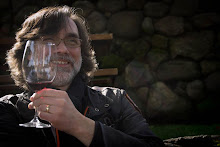
I remember Pastor Miller preaching at Barclay Heights Community Church. We met in the lodge of an old YMCA camp on Esopus Creek near Glenerie Falls. When the lodge became our permanent home, we changed the name of the church to Glenerie Chapel.
I remember Pastor Miller praying; his opening prayers were nearly the equal of his sermons. These were not pithy, punchy, sound-bited perfunctories; his prayers were ten minutes of engagement with God on matters of the day, from local to global.
I remember Pastor Miller’s velvet singing voice. It reminded me of a baritone Andy Williams with a bit of Mel Torme. From where I sat, singing seemed to be pure pleasure for him.
I remember Pastor Miller telling us about Christ’s Passion during a springtime Sunday night service thirty-some years ago. One of the other teens ran out of the lodge, weeping – overtaken by the description of what Jesus had endured for him. I ran after him and listened to his story.
I remember Pastor Miller’s Christianity including humanness. He didn’t try to portray himself as saintly; he wasn’t aloof from his congregation. He wasn’t afraid to laugh.
I don’t remember when Pastor Miller invited me to call him “Bob”. The truth is I never really got used to it. He was simply “Pastor” to me.
I remember Pastor Miller saying he thought I’d become a pastor someday. I didn’t like that, and I fought it for a long time. But over the years, his was among a small number of voices through which God conferred that calling to me. I don’t wear it as comfortably as he did but I try to be true to my legacy.
Today, I’m remembering to remember because it’s the day of Pastor’s memorial service. I wish I could be present. He and his family are very much on my mind. I’m praying they feel the support of their communities as they find their way forward. I’m praying they know they’re not carrying his memory alone. And I’m praying they find grace today to celebrate him with all their might.
Showing posts with label God. Show all posts
Showing posts with label God. Show all posts
3/28/2008
3/31/2004
Red
Red didn’t belong there in the coarse, sticky green. It caught my eye like a gem, nestled down in the grass under the clothesline. It was a little stub of crayon that had most likely fallen from the pocket of a piece of clothing hanging there.
Ironically, large size crayons were made for small size hands. But I never liked these chubby implements very much because it was impossible to render any real detail with them. I preferred the smaller sort; felt-tip markers were even better.
It was obvious that someone had liked this red log though, since both ends were rounded from use. And both edges of the stiff paper wrapper had been peeled back to expose more color.
I reached down to pick it up. My thumb and index finger closed upon it with an accuracy of pressure perfected by at least seven years of experience with the hardness of crayons. But my squeeze met nearly no resistance at all. The crayon yielded in an entirely unexpected way.
It had melted in the summer sun. Until I squeezed it, the stubby cylinder had retained its form. It was a bewildering, delightful and inexplicably gratifying sensation. In that moment I discovered the potential softness of crayons. And I learned that the faraway sun is near enough to change stuff here on earth.
Not many summers later I was with my gang of friends in one of our favorite unsupervised spots. It was nothing more than a few undeveloped acres of hillocks, bracken and small trees set between two neighborhoods and an apartment complex. Its virtue was that grownups had no reason to go there. We, on the other hand, had an excellent reason for being there: Billy Sass had firecrackers and matches. I think he’d gotten them from a cousin who’d been to South Carolina on vacation.
Firecrackers were a rarity in New York since they had to be purchased out of state. Their detonation was an event to be savored. Earlier that day we’d melted a red candle and molded its wax around the firecrackers. The idea was to make the explosion more dramatic. Blowing stuff up was without question the coolest thing that could be done with a firecracker.
Being boys, we all had to get our hands in on the action of arranging the ordnance and supervising the twisting together of fuses. We watched the red match-head scrape along the matchbook’s rough strip, and heard the successful burst of fire. A pungent whiff of sulfur wafted into the air. We watched the fragile cardboard stick move toward the fuse and hoped no breeze would blow it out. We waited for a spray of sparks from the tips of the fuses to signal us to scamper backward from our tight circle.
This particular braid of fuses burned faster than expected. My hand was the last one to pull back from the blast zone. There was a flash, a bang, a sharp sting, and the alarming sight of red. For a gasp’s length I thought the skin had been blown off of my left hand. Fortunately, it was only covered with wax shrapnel.
Red gets my attention. It usually means something important is happening. After a knock on the head I instinctively touch the injured site and check for blood on my fingers. At times I’ve felt the sweet relief of seeing none there. Other times, when my fingers have returned from the site wet and smudged with red, I’ve felt my anxiety level rising sharply. In both instances the pain might be identical, but my degree of concern differs according to the color I see.
At this time of year, along with most Christians, I look toward Golgotha – “the place of the skull” – and force myself to again behold the horror of my Savior stained red. The written accounts of his anguish create vivid, troubling images in my mind. My faith compels me to believe that Jesus had to suffer as he did, but I remain unable to understand why. I wish from my core that it could have been otherwise.
This year I have the opportunity to view a filmmaker’s depiction of the most disturbing, most humbling, and in a sense the most private scene of my faith. By all accounts, his use of red in the film is copious. If I choose to see it, I expect that it will grab my insides and not let go. It will probably never let go. That’s the cinematographer’s intent.
But with or without the movie’s help, I will think about Jesus over these next few weeks, worn and bloody – exposed and vulnerable, his divine covering peeled back. I’ll remember his softness to my distress and anxiety, and I’ll be reminded that God is near enough to change stuff here on earth.
Ironically, large size crayons were made for small size hands. But I never liked these chubby implements very much because it was impossible to render any real detail with them. I preferred the smaller sort; felt-tip markers were even better.
It was obvious that someone had liked this red log though, since both ends were rounded from use. And both edges of the stiff paper wrapper had been peeled back to expose more color.
I reached down to pick it up. My thumb and index finger closed upon it with an accuracy of pressure perfected by at least seven years of experience with the hardness of crayons. But my squeeze met nearly no resistance at all. The crayon yielded in an entirely unexpected way.
It had melted in the summer sun. Until I squeezed it, the stubby cylinder had retained its form. It was a bewildering, delightful and inexplicably gratifying sensation. In that moment I discovered the potential softness of crayons. And I learned that the faraway sun is near enough to change stuff here on earth.
Not many summers later I was with my gang of friends in one of our favorite unsupervised spots. It was nothing more than a few undeveloped acres of hillocks, bracken and small trees set between two neighborhoods and an apartment complex. Its virtue was that grownups had no reason to go there. We, on the other hand, had an excellent reason for being there: Billy Sass had firecrackers and matches. I think he’d gotten them from a cousin who’d been to South Carolina on vacation.
Firecrackers were a rarity in New York since they had to be purchased out of state. Their detonation was an event to be savored. Earlier that day we’d melted a red candle and molded its wax around the firecrackers. The idea was to make the explosion more dramatic. Blowing stuff up was without question the coolest thing that could be done with a firecracker.
Being boys, we all had to get our hands in on the action of arranging the ordnance and supervising the twisting together of fuses. We watched the red match-head scrape along the matchbook’s rough strip, and heard the successful burst of fire. A pungent whiff of sulfur wafted into the air. We watched the fragile cardboard stick move toward the fuse and hoped no breeze would blow it out. We waited for a spray of sparks from the tips of the fuses to signal us to scamper backward from our tight circle.
This particular braid of fuses burned faster than expected. My hand was the last one to pull back from the blast zone. There was a flash, a bang, a sharp sting, and the alarming sight of red. For a gasp’s length I thought the skin had been blown off of my left hand. Fortunately, it was only covered with wax shrapnel.
Red gets my attention. It usually means something important is happening. After a knock on the head I instinctively touch the injured site and check for blood on my fingers. At times I’ve felt the sweet relief of seeing none there. Other times, when my fingers have returned from the site wet and smudged with red, I’ve felt my anxiety level rising sharply. In both instances the pain might be identical, but my degree of concern differs according to the color I see.
At this time of year, along with most Christians, I look toward Golgotha – “the place of the skull” – and force myself to again behold the horror of my Savior stained red. The written accounts of his anguish create vivid, troubling images in my mind. My faith compels me to believe that Jesus had to suffer as he did, but I remain unable to understand why. I wish from my core that it could have been otherwise.
This year I have the opportunity to view a filmmaker’s depiction of the most disturbing, most humbling, and in a sense the most private scene of my faith. By all accounts, his use of red in the film is copious. If I choose to see it, I expect that it will grab my insides and not let go. It will probably never let go. That’s the cinematographer’s intent.
But with or without the movie’s help, I will think about Jesus over these next few weeks, worn and bloody – exposed and vulnerable, his divine covering peeled back. I’ll remember his softness to my distress and anxiety, and I’ll be reminded that God is near enough to change stuff here on earth.

3/26/2004
The Sacrament of Action
I believe in coffee. I believe that, when made with care, it tastes marvelous. I believe its aroma is cause for joy. I believe it assists me in the often-arduous process of waking up in the morning (and staying that way in the afternoon!). Because I believe in coffee, I engage in numerous mundane tasks in order to make it real in the physical world.
My notion of coffee on a metaphysical level might be powerful enough to create a mental image of its flavor, aroma, and effect – but nothing more. At some point, my coffee beliefs have to press through into the physical world if I want to feel the steam on my face and the bracing hot blackness on my lips. I must take authentic action.
I rinse out the dregs of yesterday’s brew (with warm water in order to simultaneously preheat the pot). I toss the spent filter and grounds, and install a new filter in the drip compartment. I fill the chamber with cold water (because cold water contains more oxygen, which enhances the flavor). I open the cupboard and take out the coffee grinder and beans. I put in the right amount of beans, plug in the grinder, hold down its “roof”, and start grinding. About twenty seconds later I firmly tap the side, and then the bottom of the grinder a few times with the heel of my palm (I have found this to be the best way to get any rogue bits of ground coffee down off of the roof before removing it). I remove the roof of the grinder, pour the fresh grounds into the clean filter, close the compartment, set the pot in its place, and push the “on” button.
I can assure you that none of those actions have any intrinsic meaning for me. It is all about the coffee – it’s all about bringing coffee into my physical reality. At 6:00AM the abstract notion of coffee will not do for my wife and me – we want tangible stuff. So, I happily engage in my bleary-eyed routine because of the hope set before me…
Is there any intrinsic meaning in reading a few chapters of Scripture in the morning? How about telling a friend the story of God's invasion into my life? Contemplative prayer? Perhaps tithing?
Maybe there is. If so, it seems like a rather pallid reality to me. For me, the real meaning of such actions is anchored in the reality of my beliefs. These are the more or less mundane acts (among many others) by which I press what is in my mind, spirit, and heart into what can be known by my hands, ears, mouth, eyes, and nose. That is what I think of as sacramental action.
A sacrament is defined as: “A rite believed to be a means of or visible form of grace…”* Baptism and Communion are “official” Sacraments. Jesus knew how important it is for humans to experience and express metaphysical things physically. He gifted us with bread and wine to taste, and water to feel in order to give his message to our bodies – not just our minds.
The life of faith is all about sacramental action. It is all about seeking ways to press the unseen into the seen. And this almost always calls for discipline, simply because moving from one modality to another is usually difficult. In the life of faith, discipline is not an end in itself; it is the force that propels us from the realm of ideas and insights into the world of action. At least, it is the piece we offer into the process; God is always the underlying and overarching force in any meaningful action.
It is good advice to “Wake up and smell the coffee.” But it’s nothing more than that until somebody actually makes the coffee!
“Faith by itself, if it is not accompanied by action, is dead.” James 2:17 (NIV)
“Faith without action is as dead as a body without a soul.” James 2:26 (Phillips)
* The American Heritage® Dictionary of the English Language, Fourth Edition
Copyright © 2000 by Houghton Mifflin Company.
Published by Houghton Mifflin Company. All rights reserved.
My notion of coffee on a metaphysical level might be powerful enough to create a mental image of its flavor, aroma, and effect – but nothing more. At some point, my coffee beliefs have to press through into the physical world if I want to feel the steam on my face and the bracing hot blackness on my lips. I must take authentic action.
I rinse out the dregs of yesterday’s brew (with warm water in order to simultaneously preheat the pot). I toss the spent filter and grounds, and install a new filter in the drip compartment. I fill the chamber with cold water (because cold water contains more oxygen, which enhances the flavor). I open the cupboard and take out the coffee grinder and beans. I put in the right amount of beans, plug in the grinder, hold down its “roof”, and start grinding. About twenty seconds later I firmly tap the side, and then the bottom of the grinder a few times with the heel of my palm (I have found this to be the best way to get any rogue bits of ground coffee down off of the roof before removing it). I remove the roof of the grinder, pour the fresh grounds into the clean filter, close the compartment, set the pot in its place, and push the “on” button.
I can assure you that none of those actions have any intrinsic meaning for me. It is all about the coffee – it’s all about bringing coffee into my physical reality. At 6:00AM the abstract notion of coffee will not do for my wife and me – we want tangible stuff. So, I happily engage in my bleary-eyed routine because of the hope set before me…
Is there any intrinsic meaning in reading a few chapters of Scripture in the morning? How about telling a friend the story of God's invasion into my life? Contemplative prayer? Perhaps tithing?
Maybe there is. If so, it seems like a rather pallid reality to me. For me, the real meaning of such actions is anchored in the reality of my beliefs. These are the more or less mundane acts (among many others) by which I press what is in my mind, spirit, and heart into what can be known by my hands, ears, mouth, eyes, and nose. That is what I think of as sacramental action.
A sacrament is defined as: “A rite believed to be a means of or visible form of grace…”* Baptism and Communion are “official” Sacraments. Jesus knew how important it is for humans to experience and express metaphysical things physically. He gifted us with bread and wine to taste, and water to feel in order to give his message to our bodies – not just our minds.
The life of faith is all about sacramental action. It is all about seeking ways to press the unseen into the seen. And this almost always calls for discipline, simply because moving from one modality to another is usually difficult. In the life of faith, discipline is not an end in itself; it is the force that propels us from the realm of ideas and insights into the world of action. At least, it is the piece we offer into the process; God is always the underlying and overarching force in any meaningful action.
It is good advice to “Wake up and smell the coffee.” But it’s nothing more than that until somebody actually makes the coffee!
“Faith by itself, if it is not accompanied by action, is dead.” James 2:17 (NIV)
“Faith without action is as dead as a body without a soul.” James 2:26 (Phillips)
* The American Heritage® Dictionary of the English Language, Fourth Edition
Copyright © 2000 by Houghton Mifflin Company.
Published by Houghton Mifflin Company. All rights reserved.
Subscribe to:
Posts (Atom)